Aluminum Frame Camper Trailer Repair in Chapel Hill
Aluminum trailers are great - lightweight, rust-resistant, and built to last. But when the frame takes a hit or a weld gives out, you need someone who knows how to work with aluminum. It's not the same as welding steel. The heat management is different, the technique is different, and if it's done wrong, the repair won't hold.
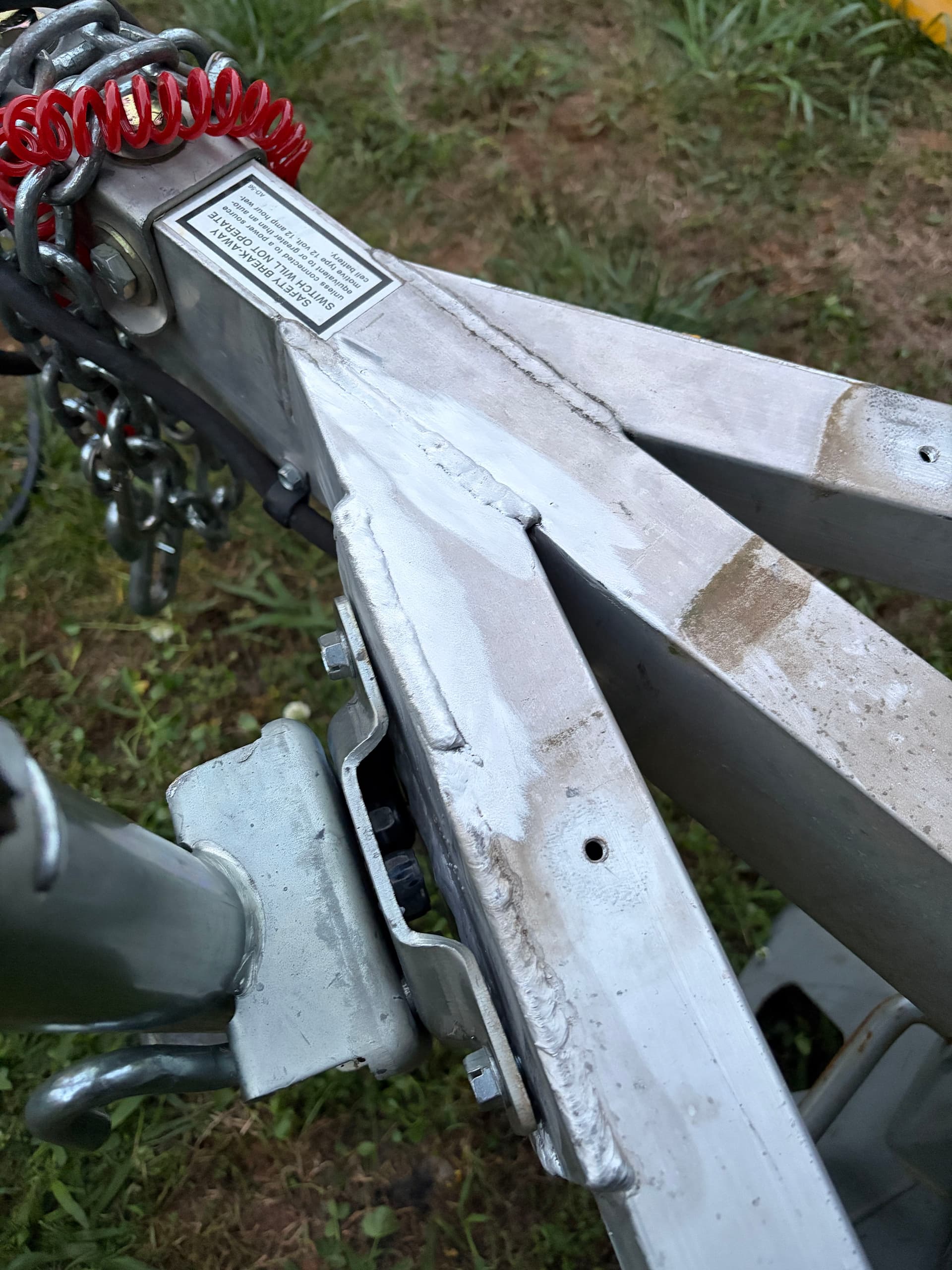
This was a camper trailer out of Chapel Hill with structural issues on the aluminum frame near the tongue assembly. The kind of thing that doesn't get better on its own - and definitely doesn't get safer the longer you ignore it. The breakaway safety hardware, chains, and coupler all depend on that frame being solid. When that junction is compromised, nothing else on the front of the trailer can do its job properly.
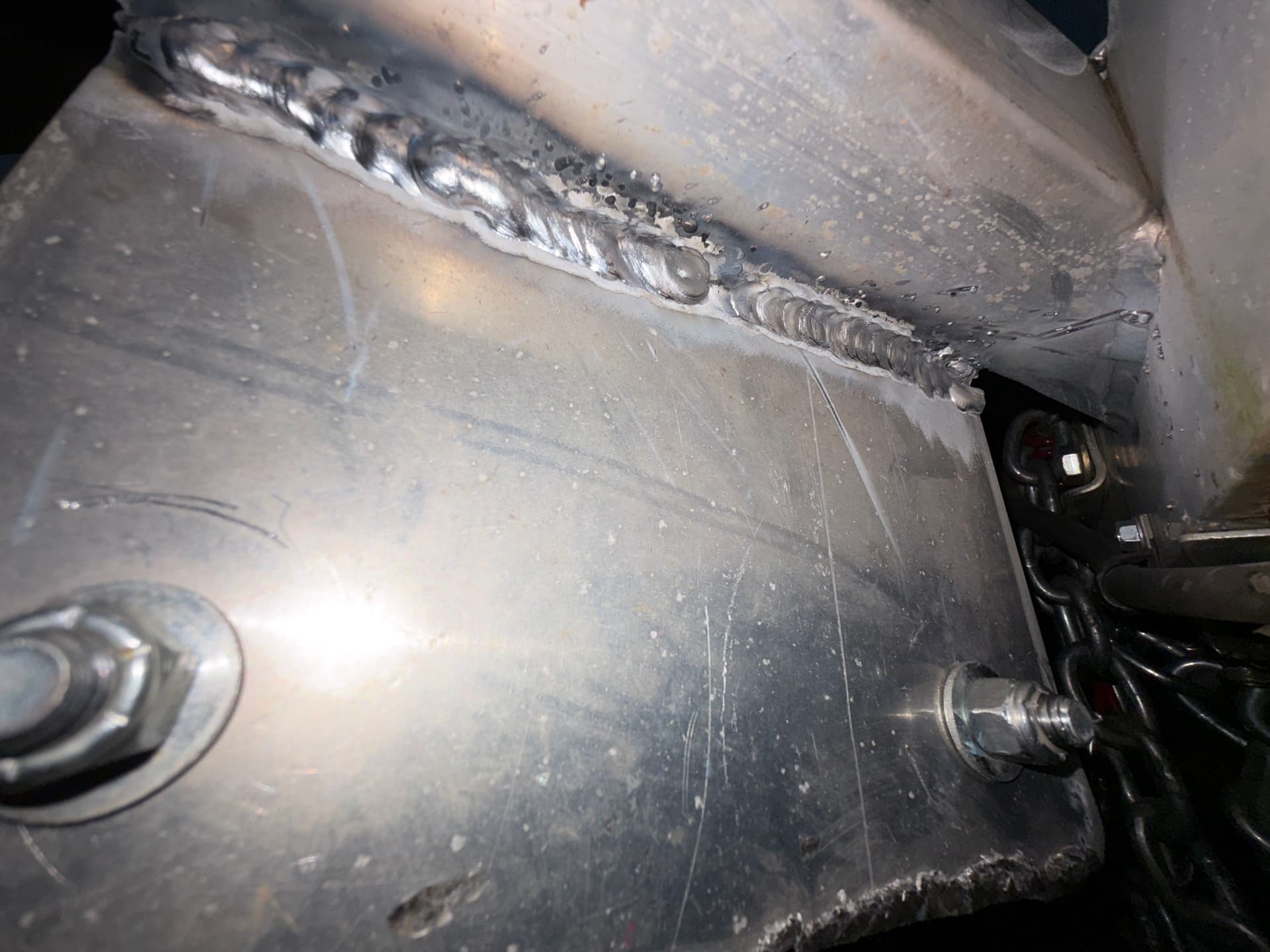
We came out to the customer and handled it on-site. That's the whole point of mobile welding - no hauling a damaged trailer to a shop, no waiting in a queue, no renting equipment to move something that probably shouldn't be moving in the first place. We showed up, assessed the damage, and laid down a clean, consistent bead right along the frame joint where it needed it most.
The weld penetration on aluminum like this has to be right. Too little and it's a surface fix that won't hold under load. Too much and you risk warping the material or burning through. What you end up with here is a structurally sound repair that gives the frame back its integrity - so when this customer hooks up and heads down the road, the trailer is doing what it's supposed to do.
Trailer problems have a way of sitting in the driveway until they become a bigger issue. If you've got a cracked frame, a failed weld, or structural damage on an aluminum trailer, don't put it off. We handle this kind of work regularly and we come to you.